“Breed coffee” search results (1400)

The two main varieties of Colombian coffee Kaddura and Colombian production
The Colombian Coffee producers Association (Federacion Nacional de Cafeteos de Clolmbia), known as [FNC] for short in the industry, introduced the two main varieties of Colombian coffee, Kaddura and Colombia. Kaddura, which was introduced from Brazil in the 1960s, now accounts for 45-50% of the country's output and has replaced the earliest Tibica. A new breed with the same name as Colombia [Goran]
2016-04-29 Colombia coffee two major main force variety Dula production
Introduction of Colombian boutique coffee Colombian coffee taste Colombian coffee characteristics brother
The Colombian Coffee producers Association (Federacion Nacional de Cafeteos de Clolmbia), known as [FNC] for short in the industry, introduced the two main varieties of Colombian coffee, Kaddura and Colombia. Kaddura, which was introduced from Brazil in the 1960s, now accounts for 45-50% of the country's output and has replaced the earliest Tibica. A new breed with the same name as Colombia [Columby]
2016-03-24 Colombia boutique coffee introduction taste characteristics production
Columbia Coffee Lazimus Manor introduces Starbucks Colombian Coffee
The main varieties of Colombian coffee are small grains of coffee. Plants are small trees or large shrubs, 5-8 m tall, usually much branched at base; old branches gray-white, nodes dilated, young branches glabrous, compressed. Leaves thinly leathery, ovate-lanceolate or lanceolate, 6-14 cm long and 3.5-5 cm wide, tip long acuminate, acuminate part 10-15 mm long, base cuneate or slightly obtuse, rarely rounded, entire or
2016-07-16 Columbia Coffee Raz Moss Manor introduction Buck Colombia
Full-bodied flavor of Indonesian Manning coffee
Manning is not the name of the producing area, the place name, the port name, nor the name of the coffee breed. How did it get its name? In fact, it is a phonetic error of the mandheling people in Mandaining, Indonesia. During the Japanese occupation of Indonesia during World War II, a Japanese soldier drank mellow coffee in a cafe, so he asked the shopkeeper the name of the coffee, and the boss mistook him for asking where you were.
2016-06-29 Taste mellow full-bodied Niman Tenin Coffee Flavor Mant not region name
Mellow and smooth Peruvian coffee flavor and taste characteristics introduction to the taste price of high-quality coffee beans in producing areas
Peruvian coffee is grown in a planned way, which has greatly increased coffee production. Its rich acidity and mellow smoothness are its most prominent features. Peruvian coffee has a soft sour taste, medium texture, good taste and aroma, and is an indispensable ingredient in the production of comprehensive coffee. Peruvian coffee of outstanding quality, with strong aroma, smooth, layered and rich sweet taste.
2016-10-11 Mellow smooth Peruvian coffee flavor taste characteristics variety producing area boutique
Introduction to Colombian Fine Coffee is Colombian coffee good? Characteristics of Colombian Coffee
The Colombian Coffee producers Association (Federacion Nacional de Cafeteos de Clolmbia), known as [FNC] for short in the industry, introduced the two main varieties of Colombian coffee, Kaddura and Colombia. Kaddura, which was introduced from Brazil in the 1960s, now accounts for 45-50% of the country's output and has replaced the earliest Tibica. A new breed with the same name as Colombia [Columby]
2016-03-23 Colombia boutique coffee profile delicious characteristics production
Columbia Coffee Manor introduces Lazmus Manor Colombian small Coffee
The main varieties of Colombian coffee are small grains of coffee. Plants are small trees or large shrubs, 5-8 m tall, usually much branched at base; old branches gray-white, nodes dilated, young branches glabrous, compressed. Leaves thinly leathery, ovate-lanceolate or lanceolate, 6-14 cm long and 3.5-5 cm wide, tip long acuminate, acuminate part 10-15 mm long, base cuneate or slightly obtuse, rarely rounded, entire or
2016-08-03 Colombia Coffee Manor producing area introduction Raz Moss Xiao Grain
Coffee chains are very different here.
Wen / Gong lost to Lantu / Wang Zhenkun, which does not produce coffee, but it is one of the cities with the largest number of cafes in the world. There is no special coffee breed, cooking skills or special blending form belonging to this city, but there is no doubt that in this city, you can drink the best coffee in the world. During my more than half a month in Melbourne, what makes me feel most comfortable is that every
2015-09-09 Coffee chain here different.
Introduction of full-grained and nutritious Colombian coffee beans
The main varieties of Colombian coffee are small grains of coffee. Plants are small trees or large shrubs, 5-8 m tall, usually much branched at base; old branches gray-white, nodes dilated, young branches glabrous, compressed. Leaves thinly leathery, ovate-lanceolate or lanceolate, 6-14 cm long and 3.5-5 cm wide, tip long acuminate, acuminate part 10-15 mm long, base cuneate or slightly obtuse, rarely rounded, entire or
2016-06-21 Granules plump Nutrition Rich Columbia Coffee beans introduction Colombia Coffee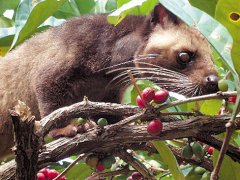
Palm Cats and Coffee beans basic knowledge of Fine Coffee beans
There are dense coffee trees on the Indonesian island of Sumatra. For hundreds of years, the residents of the island have made a living by collecting coffee beans. But in recent years, whenever the coffee is about to ripen, the troubles of the islanders also come. This is because a kind of animal called palm cat began to live and breed on the island. Palm cats like to eat coffee fruits, often before people start.
2015-09-08 Palms coffee beans boutiques basics common sense Indonesia Sumanda island long
Colombia's two main coffee bean varieties Kadura and Colombia coffee bean production regional flavor
Colombia Coffee Producers Association (Federación Nacional de Cafeteos de Clolambia), or industry abbreviation [FNC] staff introduced the two main varieties of Colombian coffee, Cadura and Colombia. Kadura was introduced from Brazil in the 1960s and now accounts for 45-50% of Colombia's production, replacing the earliest Tibica. A new breed of the same name as Colombia [Colombi
2015-10-26 Colombia coffee two major main force variety dura production
Colombian Coffee characteristics Classification Fine Coffee Origin
The history of coffee cultivation in Colombia can be traced back to the Spanish colonial era in the 16th century, and there are many theories about the history of coffee in Colombia: one: it is said to come from the island of Haiti in the Caribbean and from El Salvador in Central America. Second: in 1808, a priest introduced coffee beans to Colombia for the first time from the French Antilles via Venezuela. One of them
2016-05-27 Columbia coffee characteristics classification boutique origin Colombia cultivation
Introduction to the flavor and taste of Colombian boutique coffee varieties
The main varieties of Colombian coffee are small grains of coffee. Plants are small trees or large shrubs, 5-8 m tall, usually much branched at base; old branches gray-white, nodes dilated, young branches glabrous, compressed. Leaves thinly leathery, ovate-lanceolate or lanceolate, 6-14 cm long and 3.5-5 cm wide, tip long acuminate, acuminate part 10-15 mm long, base cuneate or slightly obtuse, rarely rounded, entire or
2016-07-19 Colombia boutique coffee variety flavor taste introduction characteristics
Introduction to the characteristics of Flavor and Taste Grinding degree of Coffee beans grown in Yunnan
According to the introduction of coffee varieties from Yunnan, China, in 1892, French missionary Father Tian used coffee fruit to breed the first coffee tree outside the church, and then cultivated more coffee trees and planted them around the church. Since then, the village of Zhukula began to grow coffee, and the village has been surrounded by coffee trees ever since. Age in the village
2016-10-24 Yunnan what planting coffee beans fruit flavor taste grinding characteristics varieties
Careless ochratoxin in coffee preservation
Are you a coffee lover? Many people will buy coffee beans and go home to make coffee, but if the ochratoxin, which is extremely harmful to the kidney, is improperly preserved, doctors and baristas advise the public to buy a small amount of it, preferably in a glass sealed jar or in a chain bag, and drink it within one month of Kaifeng.
2014-07-15 Coffee knowledge coffee preservation ochratoxin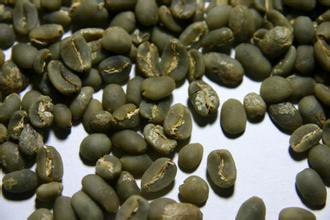
What's the difference between Indian Montala coffee and Manning coffee beans? Introduction from geographical location to flavor
Mantra Coffee: Asian Indonesian Sumatra, also known as Simandra Coffee. Her flavor is very rich, fragrant, bitter, mellow, with a little sweetness. Most coffee lovers drink on their own, but it is also an indispensable variety for blending coffee. Manning is not the name of the producing area, the place name, the port name, nor the name of the coffee breed.
2016-01-12 India Munda coffee and Mann Tenin coffee beans what is the difference geographical location
The origin of the name of Mantenin coffee beans in Indonesia
Manning is not the name of the producing area, the place name, the port name, nor the name of the coffee breed. How did it get its name? In fact, it is a phonetic error of the mandheling people in Mandaining, Indonesia. During the Japanese occupation of Indonesia during World War II, a Japanese soldier drank mellow coffee in a cafe, so he asked the shopkeeper the name of the coffee, and the boss mistook him for asking where you were.
2016-06-14 Indonesia Mante coffee bean name origin mante not district name place name
Fragrant Yunnan small Coffee Huaguoshan Coffee grindability characteristics Variety description of producing area
According to reports, in 1892, French missionary Father Tian used coffee fruit to breed the first coffee tree outside the church, and then cultivated more coffee trees and planted them around the church. Since then, the village of Zhukula began to grow coffee, and the village has been surrounded by coffee trees ever since. The two oldest elders in the village, Qi Guanghui and Li Fu
2016-10-10 Aroma rich Yunnan small grain coffee flower and fruit mountain grinding characteristics varieties producing areas
Peruvian coffee with elegant mild acidity Flavor Description Roast Degree Taste Variety Manor Introduction
Peru is located in the west of South America, with a coastline of 2254 kilometers. The Andes runs through the north and south, and the mountains account for 1/3 of the country's area. They belong to the tropical desert area, and the climate is dry and mild. Peruvian coffee is mostly grown at the foot of the Andes, where it is rich in quality traditional Central American coffee beans. Peruvian coffee beans produced in Chanchamayo in the center and Cuzco in the south
2016-10-08 Elegant Mild Acidity Peruvian Coffee Flavor Description Roast Degree Taste
Indonesia Mantenin Coffee Bean Flavor and taste introduction to Indonesian coffee characteristics Indonesian boutique coffee
Manning is not the name of the producing area, the place name, the port name, nor the name of the coffee breed. How did it get its name? In fact, it is a phonetic error of the mandheling people in Mandaining, Indonesia. During the Japanese occupation of Indonesia during World War II, a Japanese soldier drank mellow coffee in a cafe, so he asked the shopkeeper the name of the coffee, and the boss mistook him for asking where you were.
2016-07-28 Nieman Tenin coffee beans flavor taste introduction Indonesia coffee characteristics boutique